

Introduction to NSK Linear Guides
NSK linear guides are one of the most important components in modern precision engineering and automated machinery. In today’s manufacturing world, where accuracy and speed both matter at the same time, machines cannot rely on traditional rough movement systems anymore. Instead, they depend on highly advanced motion control components, and NSK linear guides are among the most trusted solutions used globally.
NSK is a well-known Japanese engineering company that has been producing high-quality motion control products for decades. Its linear guide systems are widely used in industries where even the smallest error in movement can cause production issues. These guides are designed to help machines move in a perfectly straight line with minimal friction, maximum stability, and long operational life. Because of their strong engineering design, they are now considered essential in CNC machines, robotics, semiconductor production, and many automated systems.
Working Principle of NSK Linear Guides
NSK linear guides work on a very simple but highly effective principle. Instead of allowing two metal surfaces to slide against each other, which creates friction and wear, NSK uses rolling elements such as steel balls or rollers. These rolling elements are placed inside a specially designed block that moves along a hardened rail. When the block moves, the balls roll smoothly inside internal grooves, reducing resistance and making movement extremely precise and stable.
This rolling motion is the main reason why NSK linear guides are preferred over traditional sliding systems. Sliding systems often suffer from wear, heat generation, and reduced accuracy over time, but rolling systems maintain consistent performance even under heavy loads and continuous operation. This makes NSK linear guides especially valuable in industries where machines run for long hours without interruption.
Structure and Main Components
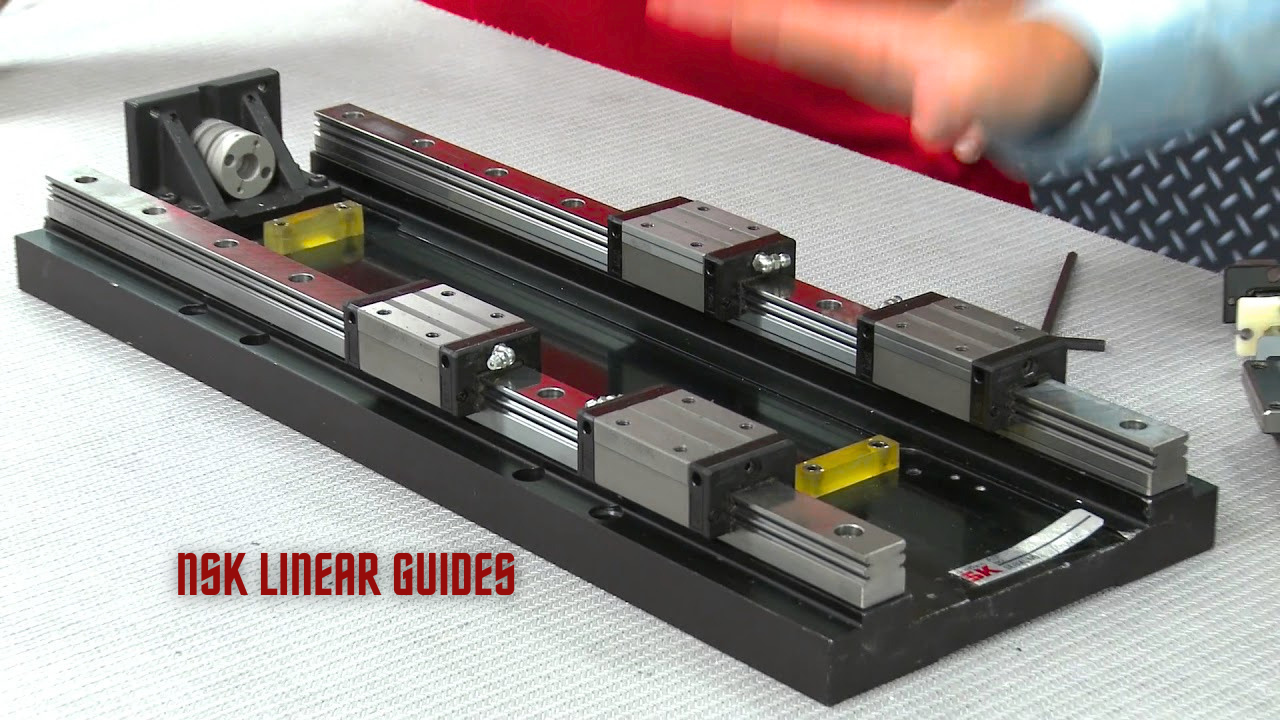
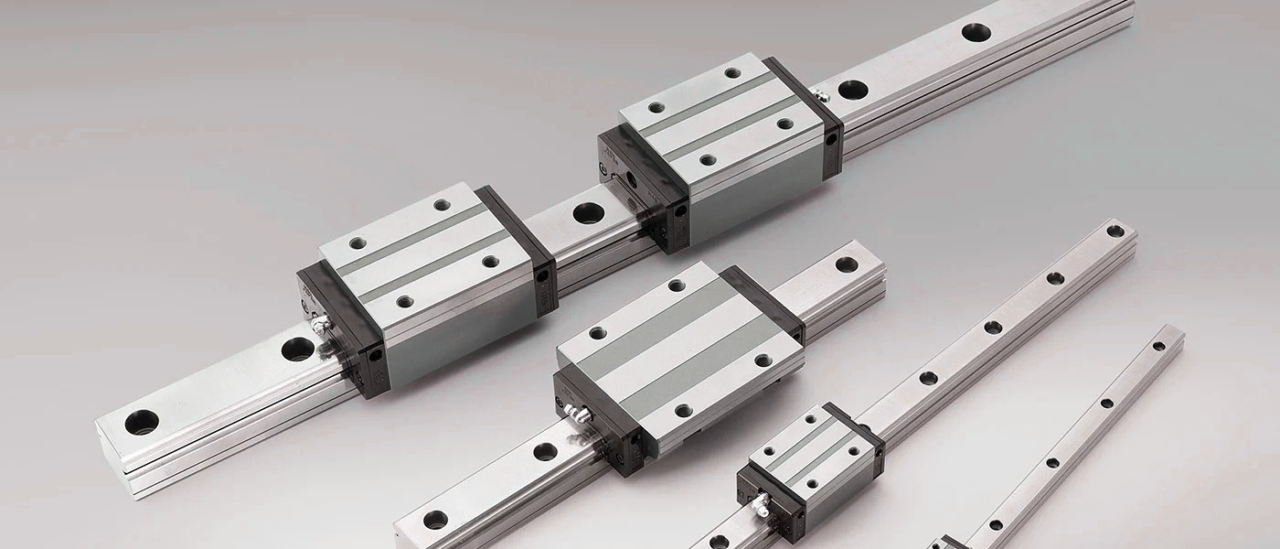
The structure of an NSK linear guide system is simple but highly engineered. It mainly consists of a rail, a carriage block, rolling elements, and protective sealing systems. The rail is mounted on a machine base and acts as a track. It is hardened and ground to ensure perfect straightness and strength. The block, also known as the carriage, moves along this rail and carries the load of the machine part that is attached to it.
Inside the block, there are precisely arranged pathways where steel balls circulate continuously. These balls are responsible for reducing friction and distributing the load evenly. Along with this, seals are installed to prevent dust, dirt, and other contaminants from entering the system. Lubrication channels are also included to ensure smooth movement and long service life. Every part is designed with precision engineering standards so that the system performs reliably in demanding environments.
NSK Linear Guides – Quick Information Table
| Category | Details |
|---|---|
| Product Name | NSK Linear Guides |
| Manufacturer | NSK Ltd. (Japan) |
| Type | Linear Motion Guide System |
| Main Function | Provides smooth, precise straight-line motion |
| Working Principle | Rolling motion using steel balls or rollers |
| Key Components | Rail, Block (Carriage), Rolling Elements, Seals |
| Main Benefit | High precision with low friction movement |
| Applications | CNC machines, robotics, automation, medical equipment |
| Load Capacity | Medium to heavy industrial loads |
| Maintenance | Low, requires proper lubrication |
| Lifespan | Long-lasting with proper care |
| Industry Use | Manufacturing, semiconductor, automotive, electronics |
Types of NSK Linear Guides
NSK linear guides come in different types depending on industrial requirements. Some are designed for general-purpose machinery where moderate load and speed are required. Others are built for heavy-duty applications where high load capacity and rigidity are necessary. There are also miniature versions used in compact equipment such as medical devices and electronic manufacturing tools. Each type is optimized for specific performance needs, ensuring flexibility across industries.
In high-precision industries such as semiconductor manufacturing, even the smallest vibration or deviation can cause defects. For this reason, NSK has developed advanced linear guide systems that minimize vibration and improve smoothness at a micro level. This level of precision allows manufacturers to produce high-quality products consistently.
Key Benefits of NSK Linear Guides
One of the biggest advantages of NSK linear guides is their ability to deliver extremely high precision. In CNC machining, even a small movement error can result in defective parts. NSK guides ensure that every movement is controlled, accurate, and repeatable. This is why they are widely used in cutting, drilling, and milling machines where precision is critical.
Another major benefit is smooth operation. Because the system uses rolling elements instead of sliding contact, the movement is quiet, stable, and vibration-free. This improves machine performance and reduces stress on mechanical parts, increasing their lifespan. Machines equipped with NSK linear guides also tend to operate more efficiently and require less maintenance compared to older systems.
Load Capacity and Durability
Load capacity is another important strength of NSK linear guides. Despite their compact design, they can support heavy loads without losing accuracy or stability. This makes them suitable for industrial robots, automotive assembly lines, and large-scale manufacturing machines. The load is distributed evenly across the rolling elements, which prevents damage and ensures consistent performance even under pressure.
Durability is also a key factor. NSK uses high-quality materials and advanced heat treatment processes to ensure that the rails and blocks can withstand continuous use. This results in a long operational life, even in harsh industrial environments. When properly maintained, these systems can function for years without major issues.
Energy Efficiency and Maintenance
Energy efficiency is another important advantage. Since friction is significantly reduced, machines require less power to move components. This leads to lower energy consumption and improved overall efficiency in production systems. In large factories where hundreds of machines operate simultaneously, this can result in significant energy savings over time.
Maintenance requirements are also relatively low. With proper lubrication and basic cleaning, NSK linear guides can maintain their performance for a long period. However, regular inspection is still important to ensure that seals remain intact and no contamination enters the system. Proper maintenance helps extend the life of the guide and ensures consistent performance.
Industrial Applications
NSK linear guides are used in a wide range of industries. In CNC machinery, they help control tool movement with high accuracy. In robotics, they allow robotic arms to move smoothly and precisely. In semiconductor manufacturing, they are used in wafer processing equipment where microscopic accuracy is required. In the medical field, they are found in imaging machines such as MRI systems and diagnostic equipment where smooth and stable motion is essential.
In the automotive industry, these guides are used in assembly lines for welding, painting, and inspection processes. They are also used in packaging and printing machines where high-speed and accurate movement is required. Their versatility makes them one of the most widely used motion control components in modern industry.
Engineering and Design Quality
From a design perspective, NSK linear guides reflect advanced engineering thinking. The use of precision grinding technology ensures perfect alignment and smooth movement. Heat-treated steel increases strength and durability, while optimized load distribution systems ensure even stress handling. Advanced lubrication channels help maintain smooth operation even under heavy usage conditions.
NSK also focuses on reducing micro-vibrations, which is extremely important in high-precision environments. Even the smallest vibration can affect measurement accuracy or product quality, especially in semiconductor and optical industries. By minimizing these vibrations, NSK improves the overall performance of sensitive machines.
Comparison with Traditional Systems
Compared to traditional sliding guide systems, NSK linear guides offer a significant technological improvement. Sliding systems suffer from high friction, faster wear, and lower accuracy. In contrast, NSK’s rolling system provides smooth, accurate, and long-lasting performance. Maintenance is also much easier, and operational efficiency is significantly higher.
Because of these advantages, most modern industrial systems have replaced sliding mechanisms with linear guide systems. This shift has played a major role in improving global manufacturing efficiency and product quality.
Future of Linear Guide Technology
Looking toward the future, NSK continues to develop new technologies in linear motion systems. These include smart lubrication systems that automatically manage maintenance needs, sensor-based monitoring systems that detect wear in real time, and AI-driven predictive maintenance solutions that help prevent machine failure before it happens. There is also ongoing research into improving micro-precision for next-generation industries such as nanotechnology and advanced robotics.
About NSK (Important Note)
It is important to understand that NSK linear guides are industrial mechanical components, not living entities. They do not have personal attributes such as age, height, family, net worth, or social media presence. However, NSK as a company has a long history in engineering innovation and is globally recognized for its contribution to motion control technology.
Conclusion
In conclusion, NSK linear guides are a critical part of modern industrial automation. Their ability to provide smooth, accurate, and reliable motion makes them essential in almost every advanced manufacturing sector. From robotics to medical equipment and from CNC machining to semiconductor production, these systems play a silent but powerful role behind the scenes.
As industries continue to evolve toward higher precision and full automation, NSK linear guides will remain a fundamental technology supporting this progress. Their combination of durability, accuracy, and efficiency ensures that they will continue to be a key component in the future of engineering and industrial development.
