

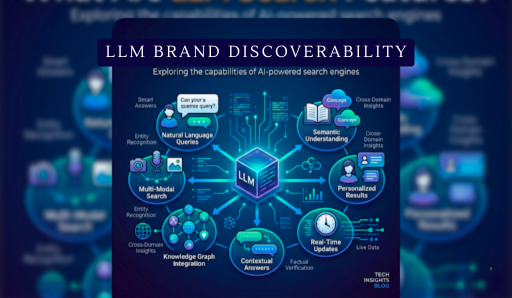
The digital world is rapidly changing. With the rise of large language models (LLMs) like ChatGPT, Claude, and Bard, the way users search for information has evolved. People no longer rely solely on search engines or social media—they now ask AI directly for recommendations and insights. This shift has created a new frontier for businesses: LLM brand discoverability.
LLM brand discoverability is the measure of how easily an AI system can find, recognize, and recommend your brand when users ask questions. It is no longer enough to focus only on SEO for Google or social media visibility. Brands must now consider how AI interprets their products, services, and reputation. In this article, we will explore what LLM brand discoverability is, why it matters, and how brands can optimize their presence in the AI-driven digital landscape.
Understanding LLM Brand Discoverability
At its core, LLM brand discoverability refers to how likely a large language model is to mention or recommend a brand when users ask relevant queries. For example, if someone asks an AI, “Which running shoes are good for beginners?”, the LLM may suggest brands that it has learned are reliable, well-reviewed, or popular.
Unlike traditional search engines that rely on keywords, backlinks, and algorithms, LLMs depend on contextual understanding and patterns in data. They analyze millions of documents, articles, reviews, and other content to provide accurate, human-like responses. Therefore, brands need to ensure that the information available online is consistent, credible, and easy for AI to interpret.
Why LLM Brand Discoverability Matters
The benefits of LLM brand discoverability are profound. Firstly, it increases brand visibility in AI-driven recommendations. If a user asks an AI assistant about a service your business provides, a brand with strong discoverability is more likely to appear in the answer.
Secondly, it improves brand trust and authority. AI systems often reference reliable sources or widely cited information. A brand mentioned consistently in these contexts gains credibility in the eyes of users.
Thirdly, it creates a competitive advantage. Early adopters of LLM discoverability strategies can outperform competitors who are solely focused on traditional marketing channels. By ensuring that AI recognizes and recommends your brand, businesses can reach audiences who may never have encountered them through conventional methods.
| Attribute | Details |
|---|---|
| Topic | LLM Brand Discoverability |
| Definition | How easily an AI (LLM) finds, recognizes, and recommends a brand |
| Purpose | Improve brand visibility and credibility in AI-driven environments |
| Key Benefits | Increased AI recommendations, brand awareness, competitive advantage |
| Key Strategies | High-quality content, structured data, consistent online presence |
| Applications | E-commerce, travel, tech, AI assistants |
| Challenges | AI bias, outdated info, privacy concerns |
| Future Outlook | Critical for AI-driven marketing and customer engagement |
How LLM Brand Discoverability Works
LLM brand discoverability works by combining multiple strategies that ensure AI systems understand your brand accurately. One key element is high-quality content. Articles, blog posts, reviews, and guides should clearly define what your brand does, who your customers are, and why your products or services stand out.
Another element is structured data and metadata. By using schema markup and organized product information, brands make it easier for AI systems to comprehend offerings. For instance, clearly labeling product names, categories, prices, and reviews allows LLMs to reference them accurately.
Consistency across platforms is also crucial. Brands that maintain accurate information on websites, social media, review platforms, and online directories are more likely to be recognized by AI. When discrepancies exist, AI may either overlook the brand or provide incorrect information.
Finally, aligning your brand with user queries is essential. LLMs prioritize answers that directly address user intent. Brands that anticipate common questions and provide clear, informative content increase their chances of being mentioned.
Real-World Applications
LLM brand discoverability has practical applications across industries. In e-commerce, for example, AI-powered chatbots can recommend products directly to users based on reviews and online mentions. Brands that optimize for LLM discoverability are more likely to appear in these suggestions, increasing potential sales.
In the travel and tourism sector, AI assistants can recommend hotels, resorts, and travel experiences. Brands with accurate online profiles, positive reviews, and consistent content across platforms are more likely to be recommended to users planning trips.
In technology and software, AI-driven recommendations are becoming more common. Users may ask, “Which productivity apps are best for remote work?” Brands that provide clear, accessible information about their products, features, and benefits are more likely to appear in AI suggestions.

Key Strategies to Improve Discoverability
- Create High-Quality Content
Write informative, detailed content that explains your products or services. Use clear language, examples, and updates to ensure AI systems can easily interpret your brand. - Use Structured Data
Implement schema markup on your website to help AI understand product names, pricing, availability, and reviews. Structured data acts as a roadmap for LLMs to access accurate information. - Maintain Consistency Across Platforms
Ensure your brand information is consistent on social media, review sites, business directories, and websites. This consistency reinforces credibility and improves AI recognition. - Monitor Online Reputation
Encourage positive reviews and respond to user feedback. LLMs often prioritize brands with strong reputations, so maintaining credibility is critical. - Optimize for User Queries
Identify common questions about your products or industry and provide clear answers in your content. Anticipating user needs increases the likelihood that AI will recommend your brand.
Measuring Success in LLM Discoverability
Measuring LLM brand discoverability is still an evolving field. Traditional metrics like website traffic or social media engagement may not fully capture AI-driven recommendations. Brands should monitor:
- Mentions in AI-generated content: Check if LLMs are referencing your brand in answers, chatbots, or AI tools.
- Direct inquiries: Track if users are reaching out to your brand after interacting with AI.
- Search visibility: AI tools often pull data from search engines, so maintaining strong SEO remains important.
- Customer feedback: Collect information from users about how they discovered your brand, particularly if AI assisted them.
Challenges in LLM Brand Discoverability
While LLM brand discoverability offers many benefits, it also presents challenges. One major challenge is AI bias or incomplete data. If your brand is new or lacks digital footprint, LLMs may overlook it in favor of well-established competitors.
Another challenge is information accuracy. AI systems may reference outdated or incorrect information if content is inconsistent across sources. Brands must continuously monitor and update their digital presence to prevent misinformation.
Finally, privacy and ethical considerations are important. LLMs rely on publicly available data, but brands must ensure that personal customer information and sensitive data are protected.
The Future of LLM Brand Discoverability
The role of AI in brand marketing will only grow. As LLMs become more sophisticated, they will increasingly influence purchasing decisions, customer trust, and brand loyalty. Businesses that invest in LLM brand discoverability now will be well-positioned to thrive in an AI-driven market.
We can expect AI systems to integrate even more deeply with digital assistants, messaging platforms, and IoT devices. Brands with strong discoverability will not only appear in traditional searches but also in AI-generated conversations, personalized recommendations, and real-time support.
Conclusion
LLM brand discoverability is the next frontier in digital marketing. It combines SEO, content strategy, and AI alignment to ensure that your brand is visible, recognized, and recommended by intelligent systems. The benefits are clear: increased visibility, trust, engagement, and competitive advantage.
Brands that prioritize high-quality content, structured data, consistent online presence, and alignment with user queries will thrive in the AI-driven landscape. As users increasingly turn to LLMs for answers, businesses must adapt or risk being overlooked.
By understanding and implementing LLM brand discoverability strategies, brands can ensure they are not only seen but also trusted and recommended in the age of AI.
