

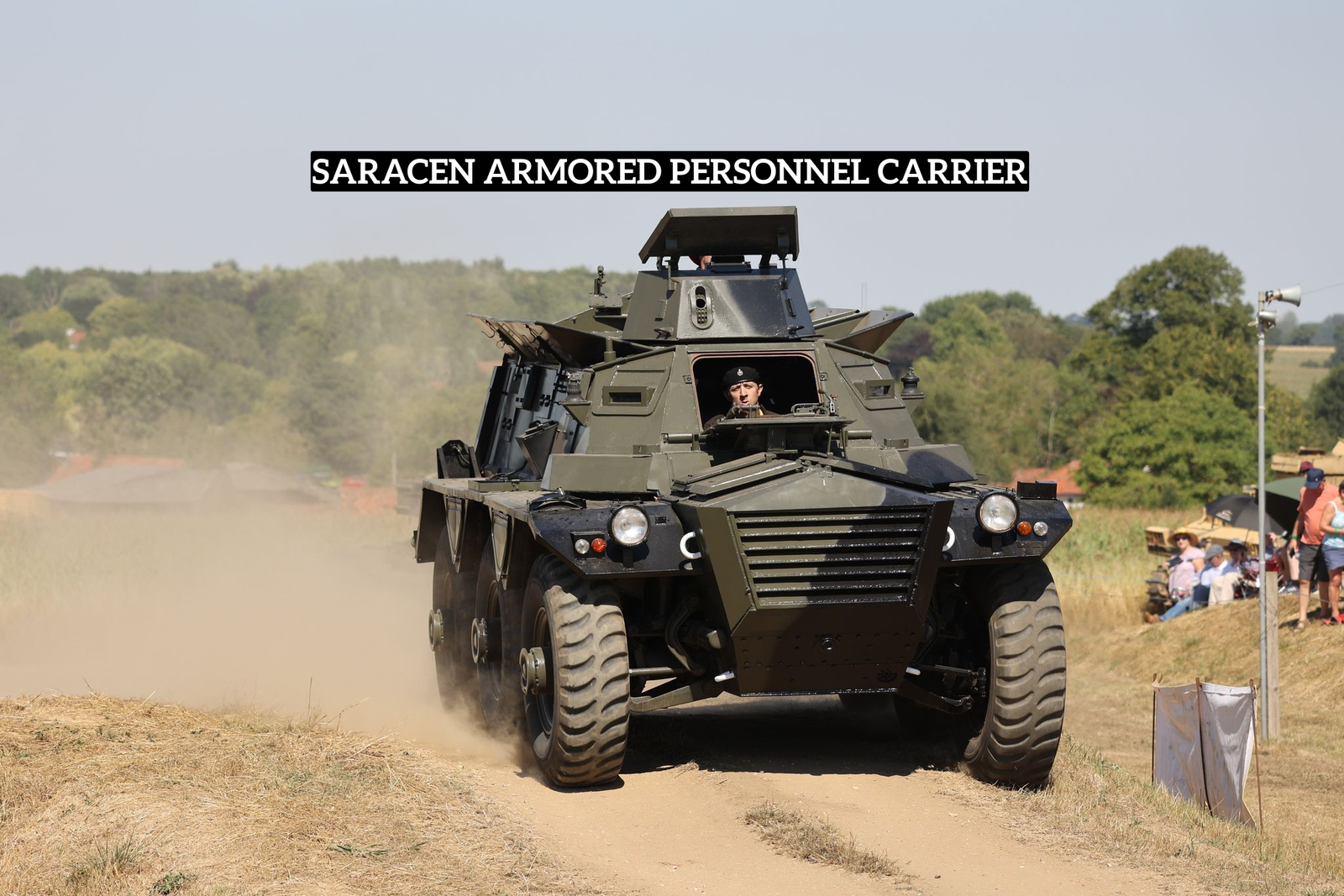
The Saracen Armored Personnel Carrier is a historic British military vehicle that became an important part of infantry transportation during the Cold War era. Built by Alvis Limited, this armoured vehicle was designed to carry soldiers safely while offering protection from battlefield dangers. Its strong construction, six-wheel drive system, and dependable performance made it one of the most recognised military vehicles of its generation.
The vehicle was not designed to fight like a tank but to support soldiers by providing secure transportation, equipment space, and battlefield mobility. Even today, military collectors and historians continue to study this vehicle because of its unique design and important role in military history.
Development and History
The development of this vehicle started in the early 1950s when the British Army wanted a modern armoured transport solution. After the Second World War, military forces understood the need for better protection for infantry soldiers moving through dangerous areas.
Alvis Limited created the vehicle as part of the FV600 series, a family of military vehicles built for different roles. The first prototype was completed in 1952, and it later entered service with the British Army during the 1950s.
The design focused on reliability, simple maintenance, and flexibility. It was created to operate in different environments and support soldiers during various military operations.
Saracen Armored Personnel Carrier-Bio Table
| Category | Details |
|---|---|
| Vehicle Name | Saracen Armored Personnel Carrier |
| Manufacturer | Alvis Limited |
| Country of Origin | United Kingdom |
| First Prototype | 1952 |
| Age | Over 70 years old |
| Vehicle Type | Armoured Personnel Carrier (APC) |
| Military Family | FV600 Series |
| Main Purpose | Infantry transport and battlefield support |
| Engine | Rolls-Royce B80 Petrol Engine |
| Drive System | 6×6 Wheeled Drive |
| Length | Approx. 4.8 metres |
| Height | Approx. 2.4 metres |
| Weight | Around 11 tonnes |
| Crew | 2 crew members + infantry soldiers |
| Production Period | 1952–1976 |
| Known For | British Cold War military service |
| Family | Part of FV600 vehicle family |
| Net Worth | Not applicable (military vehicle) |
| Social Media | No official account |
| Current Status | Retired, preserved by collectors and museums |
Age and Historical Value
The Saracen Armored Personnel Carrier is now more than 70 years old, based on its introduction in the early 1950s. Its long history makes it an important example of British post-war military engineering.
During its service life, the vehicle supported many operations where troops needesaracen armored personnel carrier, saracen armored personnel carrier profile, saracen armored personnel carrier history, saracen armored personnel carrier age,d safe movement and protection. It became especially recognised during British military deployments in the Cold War period.
Although modern armoured vehicles eventually replaced it, the vehicle remains valuable as a piece of military heritage. Many preserved examples can still be found in museums and private collections.
Design and Physical Appearance
The vehicle has a classic military appearance with a rounded armoured body, large wheels, and a strong steel structure. Its design reflects the engineering style of the 1950s, where durability and reliability were major priorities.
The armour provided protection against small arms fire and other battlefield threats of its time. The front area was designed for the driver and commander, while the rear section allowed soldiers to sit with their equipment.
The vehicle was approximately 4.8 metres long, around 2.5 metres wide, and about 2.4 metres high. It weighed nearly 11 tonnes, depending on the version and equipment.
Its six-wheel drive system allowed it to travel across rough terrain and challenging roads, making it useful for military transportation duties.
Engine and Performance
The vehicle was powered by a Rolls-Royce B80 petrol engine, which was known for strength and reliability. This engine provided enough power for carrying troops and operating in difficult conditions.
It could reach a top speed of about 72 kilometres per hour and had a range of approximately 400 kilometres. While it was not built for high-speed combat, it provided dependable movement for infantry units.
One of its biggest advantages was its simple mechanical design. Soldiers and maintenance teams could repair and service the vehicle more easily compared with more advanced military systems.
Crew and Military Role
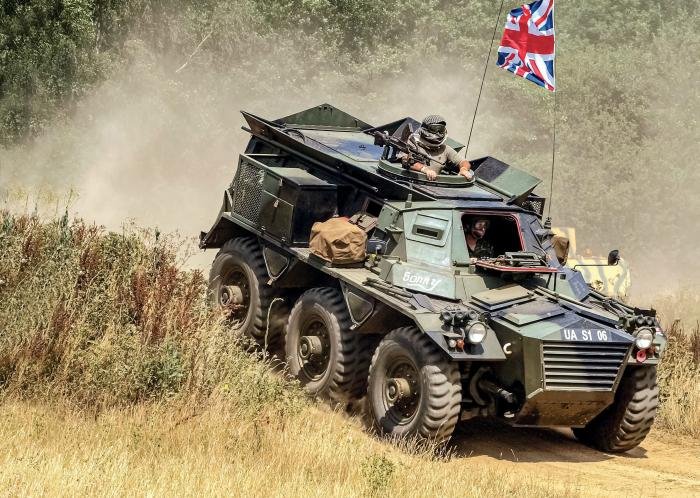
The main purpose of the Saracen Armored Personnel Carrier was to transport soldiers safely. It usually operated with a crew of two people, including the driver and commander, while carrying infantry personnel in the rear compartment.
The vehicle could carry soldiers along with their weapons and equipment. It was also fitted with defensive machine guns to provide protection during operations.
Besides troop transportation, different versions were developed for command duties, medical evacuation, and other support roles. This made the vehicle more useful for military forces.
Family and Related Vehicles
This vehicle belonged to the FV600 family, which included several other military designs. These vehicles shared similar engineering features and mechanical components.
Related models included command vehicles, reconnaissance vehicles, and ambulance versions. The shared platform helped armies reduce maintenance costs and made vehicle management easier.
The FV600 family showed how British engineers created flexible military solutions using a common design approach.
Service Around the World
The Saracen Armored Personnel Carrier was produced in large numbers and used by different military forces around the world. While it was strongly associated with the British Army, other countries also operated this vehicle.
Its reliability allowed it to remain useful for many years. Some examples continued serving in secondary roles even after newer vehicles became available.
Today, retired models are popular among collectors and military enthusiasts. Restored examples are often displayed at historical events and military exhibitions.
Lifestyle, Value and Online Presence
A military vehicle does not have a personal lifestyle, family, or social media account like a human. However, its operational life tells the story of decades spent transporting soldiers, supporting missions, and working in challenging conditions.
The vehicle also does not have a personal net worth. However, restored examples can have financial value depending on their condition, originality, and historical importance. Collectors often appreciate these vehicles because they represent important moments in military development.
There is no official social media profile for this vehicle, but many online communities share photographs, restoration projects, and historical information about it.
Legacy of the Vehicle
The legacy of the Saracen Armored Personnel Carrier comes from its practical design and long military service. It represents an important period when armies were improving infantry protection and battlefield mobility.
Modern armoured personnel carriers now include advanced technology, stronger armour, and improved systems. However, classic vehicles like this helped influence the development of future military transport designs.
Its history continues to attract attention because it represents British engineering skill, military innovation, and the changing nature of warfare.
Conclusion
The Saracen Armored Personnel Carrier remains one of Britain’s most memorable Cold War military vehicles. Developed by Alvis Limited in the 1950s, it provided soldiers with protected transportation and reliable battlefield support.
Although it does not have personal details such as age, family, height, lifestyle, social media, or net worth like a person, its importance comes from its engineering achievements and historical service. Today, it continues to be respected by military historians, collectors, and enthusiasts around the world.
