

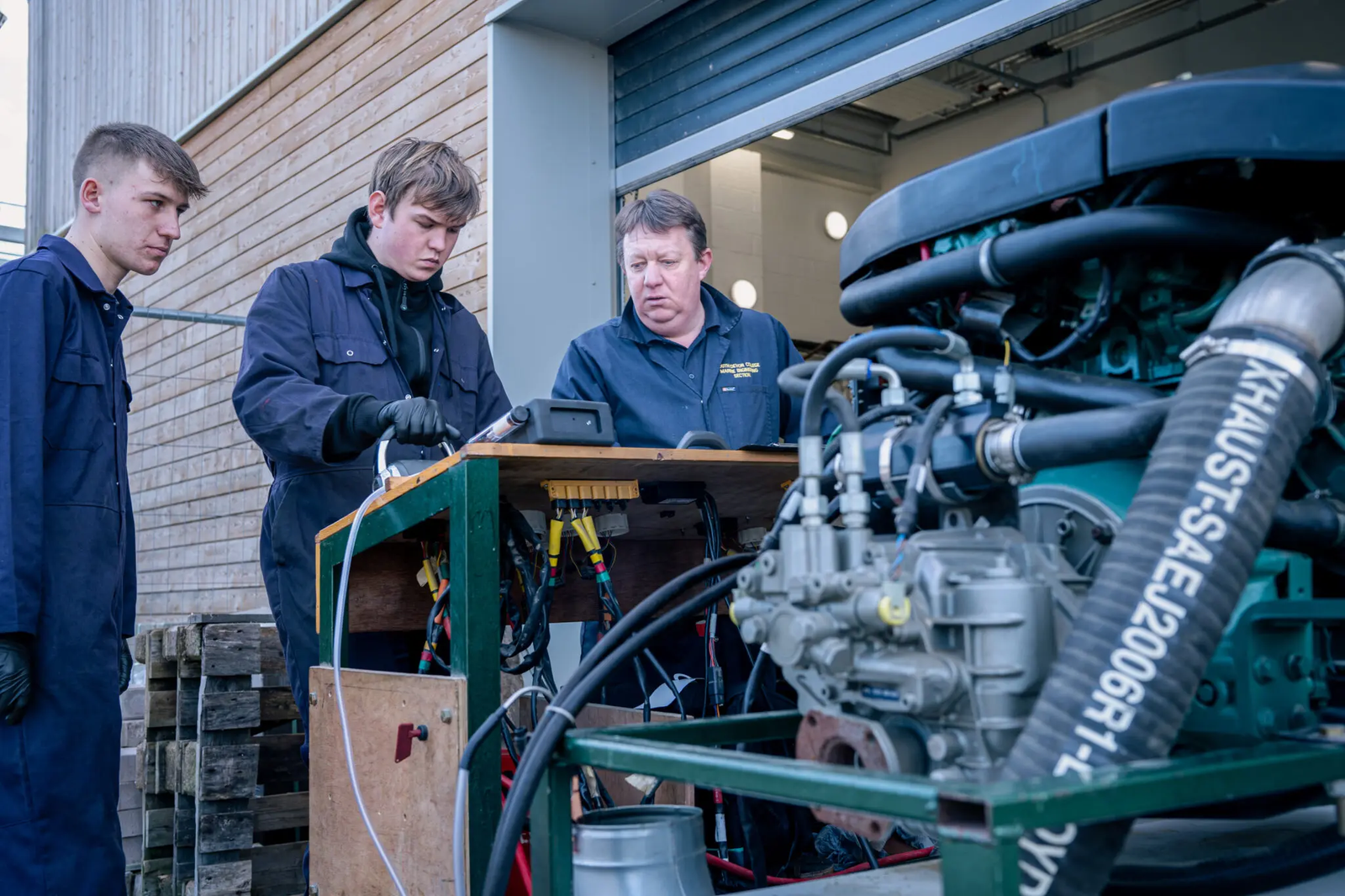
Choosing an engineering career can be an exciting decision, especially for people who enjoy machinery, problem-solving and practical work. Marine engineering apprenticeships offer a hands-on route into the maritime industry by combining employment, technical education and workplace experience. Instead of spending several years studying only in a classroom, an apprentice learns directly from experienced professionals while developing the knowledge and practical skills needed to work with marine engines, propulsion equipment and vessel systems.
Marine engineering covers much more than simply repairing boat engines. Modern vessels rely on sophisticated mechanical, electrical, hydraulic, electronic and computer-controlled systems, while the industry itself is moving towards hybrid, electric and other lower-emission technologies. South Devon College, for example, describes its Level 3 Marine Engineer Apprenticeship as training learners to install, maintain, fault-find and repair marine engines and associated equipment across vessels such as yachts, motorboats, workboats, commercial ships and superyachts.
What Is Marine Engineering?
Marine engineering is the specialist area of engineering concerned with the machinery and technical systems that allow vessels to operate safely and efficiently. A marine engineer may work with propulsion systems, engines, transmissions, cooling systems, hydraulics, electrical equipment and other onboard machinery.
The work can involve inspecting equipment, carrying out planned maintenance, diagnosing faults, replacing damaged components and testing systems after repairs. Engineers may also interpret technical drawings and specifications, manufacture or modify components, and help commission new systems.
The role is becoming increasingly technology-focused. South Devon College notes that modern marine engineering education includes areas such as electric boats, autonomous vessels, engine management and computer-based maritime systems. This means future engineers are likely to need both traditional mechanical skills and an understanding of newer technologies.
Bio Table
| Detail | Information |
|---|---|
| Topic | Marine Engineering Apprenticeships |
| Industry | Marine & Engineering |
| Training Level | Mainly Level 3 apprenticeship routes |
| Learning Style | Workplace training + technical study |
| Key Skills | Marine engines, maintenance, diagnostics, propulsion |
| Career Options | Marine Engineer, Engineering Technician, Maintenance Engineer |
| Main Benefit | Earn while gaining practical experience |
| Target Audience | Students, school leavers and aspiring engineers |
How Apprenticeships Work
The main attraction of marine engineering apprenticeships is the combination of learning and employment. Apprentices normally spend most of their time with an employer gaining practical experience while attending a college or training provider for structured technical education.
The exact schedule varies between employers and apprenticeship standards. One South Devon College programme uses a day-release model, with apprentices attending college one day each week and working at least 30 hours per week for the remainder of their working time. The programme is described as a four-year Level 3 apprenticeship.
Current vacancies show that other programmes can have different arrangements. For example, a 2026 GOV.UK listing for a Marine Engineer Apprentice with Starboard Engineering gives a duration of three years and six months, with training delivered through Southampton College on a day-release basis.
This difference is important for applicants. There is not one universal timetable for every apprenticeship, so prospective candidates should always check the individual vacancy, employer and training provider.
What You Will Learn
A major part of marine engineering apprenticeships involves developing practical competence. Apprentices can learn how to diagnose mechanical problems, maintain machinery and install different types of marine engines.
South Devon College’s programme specifically covers diagnostic testing, installation of inboard and outboard engines, zero-emission electric propulsion, precision alignment, component assembly, removal and overhaul, routine maintenance, testing and diagnostics. Apprentices can also support commissioning, testing and sea trials.
Other current vacancies provide an insight into the broader responsibilities involved. One GOV.UK apprenticeship listing includes fault-finding on diesel engines, transmissions, hydraulic systems, electronic and electrical systems, along with servicing vessels, testing equipment after repairs and supporting sea trials.
These experiences help apprentices understand how individual components work together as part of a complete vessel.
Entry Requirements
Entry requirements depend on the employer and the specific apprenticeship standard. Applicants should not assume that every vacancy has exactly the same academic requirements.
For the South Devon College programme, applicants are expected to have a genuine interest in the subject and normally need Grade 4 or equivalent in English and mathematics.
The older Level 3 Marine Engineer standard published by Skills England also states that employers typically looked for GCSEs or equivalents in mathematics, English, science and technology, although individual employers determine their own requirements. That particular standard is now marked as retired, so applicants should rely on the current standard or vacancy rather than treating older requirements as universal.
Good academic results are helpful, but practical curiosity and attitude matter too. Engineering employers commonly value attention to detail, communication, organisation, initiative and a willingness to learn.
Practical Experience
One of the strongest features of marine engineering apprenticeships is the amount of practical experience involved. Apprentices do not simply learn engineering theory and then wait until graduation to see how it applies in the workplace.
Instead, they can gradually become familiar with workshop equipment, measuring instruments, hand tools, machinery and real marine components. They may work on maintenance tasks, assist qualified engineers and develop their ability to diagnose problems under supervision.
South Devon College’s Marine Academy in Kingswear provides a particularly practical learning environment. The college says its facilities include marine engineering workshops, operational engines and propulsion units, hydraulic, pneumatic and electrical system simulators, diagnostic areas and equipment for component manufacture and reconditioning.
That type of environment can help bridge the gap between classroom learning and professional engineering work.
Safety Matters
Marine engineering can involve heavy components, moving machinery, electrical equipment, fuels, high temperatures and challenging working environments. Safety therefore forms an essential part of professional training.
Apprentices learn to follow workplace procedures, use appropriate protective equipment and comply with organisational and statutory health and safety requirements. They also need to understand quality standards and environmental responsibilities.
Safety is not treated as something separate from engineering competence. A technically correct repair is not enough if it is completed in an unsafe manner or without following the required procedures.
New Marine Technology
The marine industry is changing, and marine engineering apprenticeships are increasingly influenced by new propulsion and digital technologies. Electric propulsion, hybrid systems, automation and computer-based monitoring are becoming more important in parts of the sector.
South Devon College highlights the growing role of electronics and computers in modern maritime operations and describes training that introduces students to electric boats, autonomous vessels and emerging propulsion technologies.
This shift creates an interesting opportunity for new engineers. Traditional mechanical knowledge remains important, but future professionals may also need to understand electrical systems, diagnostics, software-assisted monitoring and energy efficiency.
Career Opportunities
Completing an apprenticeship can open the door to several marine and engineering careers. Depending on the qualification, employer and further training, an apprentice may progress into roles involving marine maintenance, mechanical engineering, engineering technology, vessel repair or technical operations.
Current UK vacancies demonstrate the variety of opportunities available. A 2026 GOV.UK listing for Estuary Services describes work involving fast pilot launches, diesel engines, transmissions, hydraulics, electronic and electrical systems, repairs and sea trials.
There are also opportunities within the defence sector. Current Royal Navy apprenticeship listings include marine engineering routes involving warships, propulsion, electrical systems and sophisticated engineering equipment.
With experience and further qualifications, an engineer can potentially progress into more senior technical, supervisory or management positions.
Pay and Employment
An apprenticeship is paid employment, but the exact wage depends on the employer, programme, age and current apprenticeship rules. It is therefore better to check individual vacancies rather than relying on a single salary figure.
For example, current 2026 GOV.UK listings show different salaries for different marine engineering opportunities. One private-sector Marine Engineer Apprentice vacancy lists £19,500 per year, while an Estuary Services marine engineering apprenticeship lists £20,875.40 per year.
Some specialist employers may offer substantially different packages. The Royal Navy, for example, advertises separate marine engineering apprenticeship opportunities with their own salary and benefits structures.
Age and Personal Details
People researching marine engineering apprenticeships sometimes look for personal-profile information such as age, height, family, physical appearance, net worth or social-media accounts. These details do not apply to an apprenticeship course itself.
There is no meaningful “height” or “net worth” profile for a training programme, and a course does not have a family background or personal social-media identity. Individual apprentice requirements are instead concerned with eligibility, qualifications, employment, skills and suitability for the role.
Age requirements can vary according to the apprenticeship and employer, so applicants should check the specific vacancy and current UK apprenticeship guidance before applying.
Finding an Apprenticeship
Finding the right opportunity requires more than searching for the course name. Applicants should investigate shipyards, boatbuilders, marine engineering companies, commercial vessel operators, ports, defence organisations and other maritime employers.
South Devon College advises prospective learners to seek an employer offering an apprenticeship vacancy and provides careers guidance, CV assistance and interview preparation. Applicants can also use the official GOV.UK apprenticeship service to search current vacancies.
When comparing opportunities, look at the qualification, duration, working hours, training location, employer, salary and expected duties. It is also worth checking whether the role involves workshop work, travel, vessel work or sea trials.
Is It a Good Choice?
For someone who enjoys machinery and practical engineering, marine engineering apprenticeships can provide a strong start to a technical career. The combination of workplace learning and formal education allows an apprentice to develop skills in a real professional environment while working towards recognised training.
The career is not necessarily easy. Marine engineering can require physical work, careful attention to safety, patience when diagnosing faults and the ability to work effectively with other trades. Some positions may also involve unusual hours, travel or working away from home.
However, for people who genuinely enjoy engineering and the maritime environment, those challenges can be part of what makes the profession rewarding.

Final Thoughts
The appeal of marine engineering apprenticeships lies in their practical nature. Learners can develop technical knowledge while gaining genuine experience with engines, propulsion systems, mechanical components and modern marine technologies.
The South Devon College programme demonstrates how a Level 3 route can combine college study with substantial workplace training, while current GOV.UK vacancies show how marine engineering opportunities can differ between commercial employers, specialist companies and defence organisations.
Anyone considering this career should research individual vacancies carefully, check the current entry requirements and think about the type of marine environment in which they would like to work. With the maritime industry becoming increasingly technical and environmentally focused, developing strong mechanical foundations alongside electrical and digital awareness can provide a useful foundation for a long-term engineering career.
