

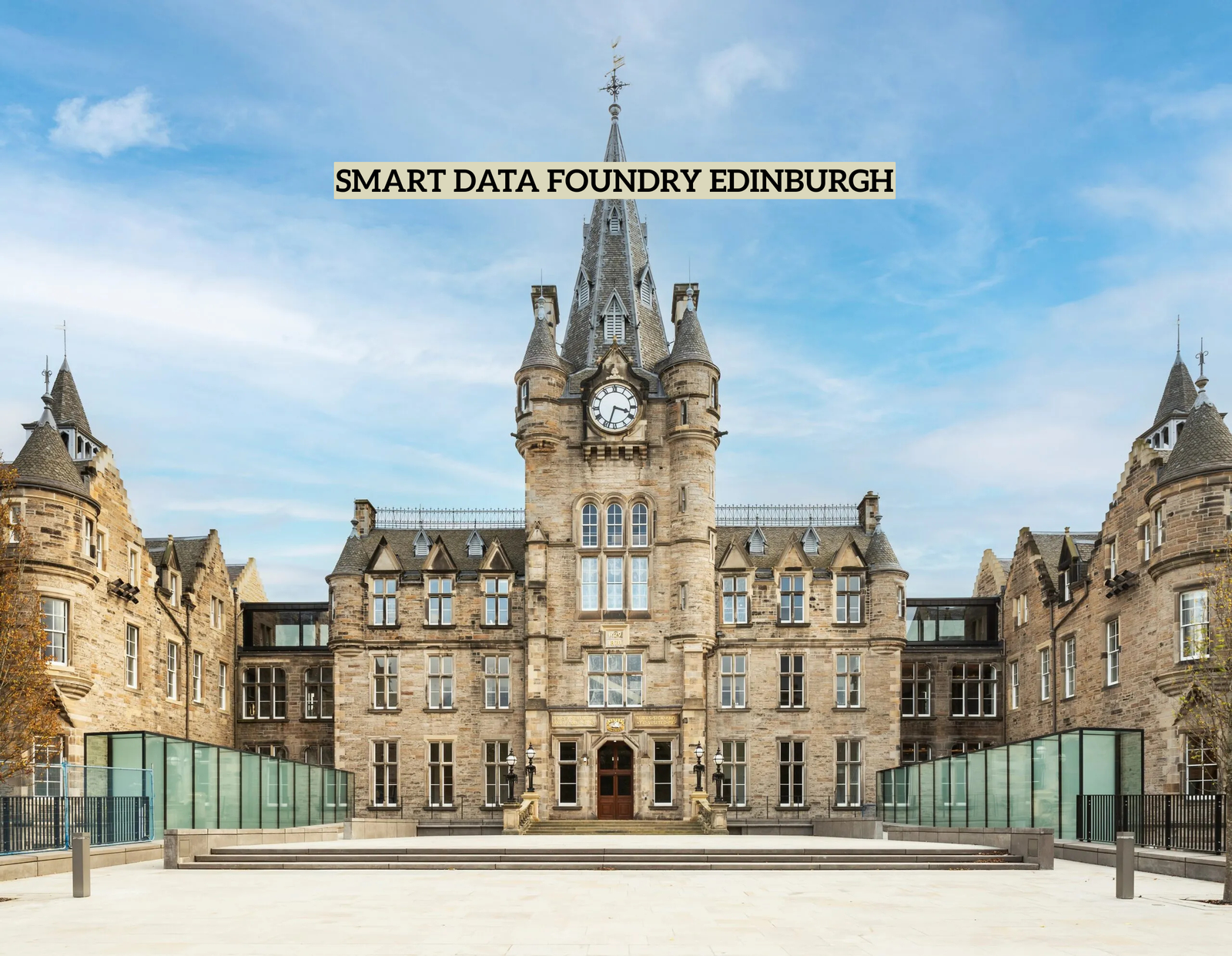
Edinburgh has quietly become one of Europe’s more interesting places to work in data science—not because it’s flashier than London or better-funded than Cambridge, but because it works differently. The Smart Data Foundry Edinburgh sits at the center of that difference.
Most innovation hubs follow a standard template: offer cheap office space, host networking events, hope something sticks. The Smart Data Foundry Edinburgh is more deliberately designed. It connects academic research directly to commercial problems, provides expensive computational infrastructure that individual startups couldn’t justify buying, and functions as a real talent magnet for a city that actually has something to offer data scientists beyond just jobs.
This matters because data science talent is genuinely scarce, and the competition for it is intense. How cities compete for that talent, and how they retain it, is increasingly central to their economic future.
The Unglamorous Foundation
Before discussing what Smart Data Foundry Edinburgh does, it’s worth understanding why Edinburgh even has this conversation. The University of Edinburgh’s computer science program—particularly its machine learning and AI research groups—has been genuinely world-class for decades. This isn’t marketing; citations and conference placements back it up. That existing strength created natural infrastructure: researchers who understood the field stayed in the city or returned there, companies hiring data scientists recruited from the university, and capital followed the talent and the research.
But proximity to good research doesn’t automatically create a thriving commercial ecosystem. Many university towns have excellent computer science programs and still struggle to convert that into viable businesses or to retain talent long-term. The problem is usually friction—researchers don’t know how to start companies, startups can’t access the datasets they need, companies can’t find people with the specific skills they’re hiring for, and funding sources don’t understand the field well enough to back the right teams.
The Smart Data Foundry Edinburgh was built to reduce exactly that friction.
How the Foundry Actually Works
Unlike most business incubators, the Smart Data Foundry Edinburgh isn’t primarily a landlord. Yes, it provides office space. But that’s almost the least important thing it does.
The real offering is computational infrastructure. A machine learning team working on, say, fraud detection for financial services needs GPU clusters to train models. A cluster that can run serious deep learning costs tens of thousands of pounds. Most startups can’t justify that expense when they’re still proving whether their product works. The Smart Data Foundry Edinburgh amortizes that cost across multiple teams. Members access shared AWS or Azure resources at negotiated rates that are substantially cheaper than retail pricing—not because the Foundry is subsidizing it, but because they’re buying in volume and passing those savings along.
That alone matters. It’s the difference between a team spending £2,000 per month on compute (making profitability nearly impossible early on) and spending £300 per month on the same resources through the Foundry.
The second piece is datasets. In sectors like healthcare, finance, and logistics, finding usable training data is a genuine bottleneck. You can’t just download patient records or transaction histories from the internet. The Smart Data Foundry Edinburgh acts as an intermediary—it works with NHS trusts, financial institutions, and other organizations to make anonymized, legally compliant datasets available to startups and researchers. A health tech startup can access actual patient data without spending six months negotiating data-sharing agreements.
The third piece is mentorship and connections. This is harder to quantify, but it’s often the difference between a team that survives and one that fails. Founders working in the Smart Data Foundry Edinburgh have access to advisors who’ve actually built data science products, connections to venture capital firms that understand AI, and introduction channels to potential customers. Early-stage founders are notoriously bad at knowing what they don’t know. Structured access to experienced people who’ve made—and survived—mistakes in the same space accelerates learning significantly.
Who Actually Uses the Foundry
The Smart Data Foundry Edinburgh isn’t a single building or even a single organization. It’s more of an ecosystem structure with several different entry points. Startups in the early stages (pre-revenue through Series A) can access an accelerator program that pairs them with mentors and connects them to investors. PhD researchers and postdocs can apply for fellowships that fund a year or two of research focused on commercially viable problems. Established companies setting up research labs in Edinburgh can use the Foundry as a network hub.
The common thread is specificity. The Smart Data Foundry Edinburgh deliberately doesn’t try to be everything to everyone. It focuses on applied machine learning and data-driven products, not broader tech entrepreneurship. This focus means the network actually has useful knowledge to share—everyone involved understands the core domain.
A typical success case: a researcher working on anomaly detection for network security completes a PhD at the University of Edinburgh. Through the Smart Data Foundry Edinburgh fellowship program, she spends a year working on a commercialized version of her work. She gets access to real network traffic data from a financial services company (anonymized and properly governed), compute resources to train models at scale, and introductions to security companies who might be interested in licensing or buying the technology. Within two years, she’s running a small team, has closed initial customers, and is raising a seed round. Without the Foundry structure, she’d likely have spent that time writing grant applications and navigating data-sharing negotiations manually.

Why Edinburgh Over Other Places
This is the question that matters for understanding the Foundry’s actual value. Why would a data scientist or founder choose Edinburgh over London, Cambridge, or even Amsterdam or Berlin?
Cost is one factor, but it’s overstated. Yes, salaries and office rent are lower than London. That matters for early-stage startups trying to stretch funding. But for anyone past the seed stage or working at an established company, cost differences are secondary.
What actually matters is that Smart Data Foundry Edinburgh isn’t competing on cost—it’s competing on ecosystem depth. The University of Edinburgh provides a continuous stream of trained talent. The existing community of data science startups and established tech companies means there’s genuine critical mass. The Foundry itself functions as the connective tissue that makes all that available rather than just theoretically present.
There’s also something real about how Edinburgh thinks about data science. The city’s strength has always been in applied research that solves actual problems—not aimless exploration, but “here’s a real industry problem, let’s build models that fix it.” That orientation is baked into how the Smart Data Foundry Edinburgh operates.
The Honest Limitations
The Smart Data Foundry Edinburgh isn’t a guaranteed path to success. Mentorship and networks can’t fix a bad idea or a weak team. Cheap compute helps, but you still need the right people and the right problem. The Foundry functions as an accelerator for promising teams, not a rescue vehicle for failing ones.
There’s also still a talent ceiling. Edinburgh’s pool of experienced data scientists and machine learning engineers is smaller than London’s or San Francisco’s. If you’re building a team of 50 ML specialists, Edinburgh will be harder than other hubs. For teams up to maybe 10–15 people, the Foundry and the university provide adequate access. Beyond that, you’re pulling from a smaller reservoir.
Long-term retention of talent remains an open question. The Foundry can attract ambitious people early in their careers. Whether it retains senior people who’ve proven themselves and have options elsewhere is still being tested.
What Happens Next
The Smart Data Foundry Edinburgh is now established enough that its value is becoming measurable. The test over the next few years will be whether it produces companies that actually scale beyond Series A, whether it genuinely becomes a place senior data scientists want to be, and whether it can retain people even as they become more valuable and have more options.
None of this is guaranteed. But the fact that the Foundry exists—that a city has thought carefully about what actually accelerates data science companies rather than just applying a generic startup template—suggests Edinburgh is thinking about this differently. That matters more than the Foundry’s specific programs or facilities.
The Bottom Line:
The Smart Data Foundry Edinburgh works because it solves real problems that ambitious data scientists and founders actually face. It’s not a generic startup accelerator dressed up as innovation policy—it’s specifically designed around what makes data science teams succeed or fail. That’s rare.
Most cities approach tech talent the same way: tax breaks, cheap real estate, cheerleading. Edinburgh’s approach is different. It acknowledges that data scientists need expensive infrastructure, governed access to real data, and mentorship from people who’ve actually built things in the field. Then it built systems to provide those things at scale.
FAQs
Q: What exactly is Smart Data Foundry Edinburgh?
A: It’s an innovation ecosystem providing computational infrastructure, dataset access, and mentorship to data science startups and researchers focused on applied machine learning in Scotland.
Q: Who can join Smart Data Foundry Edinburgh?
A: Early-stage AI and data-driven startups (pre-revenue to Series A), PhD researchers, postdocs, and established companies setting up machine learning labs in Edinburgh can all access different Foundry programs.
Q: How much does Smart Data Foundry Edinburgh cost to join?
A: Costs vary by program—fellowships are heavily subsidized, accelerator programs are competitive and often equity-free, and infrastructure access ranges from subsidized rates for early startups to standard cloud pricing for established teams.
Q: What datasets are available through Smart Data Foundry Edinburgh?
A: The Foundry provides anonymized, legally compliant datasets from NHS trusts, financial institutions, and logistics companies, eliminating months of data-negotiation work for health tech, fintech, and supply-chain AI startups.
Q: Why choose Smart Data Foundry Edinburgh over London or Silicon Valley?
A: Edinburgh offers world-class university talent, lower operational costs, a specialized AI community with deep domain expertise, and the Foundry’s direct access to mentors, investors, and customers—all at a meaningful scale without the competition saturation of larger hubs.
