


Windows do much more than provide natural light and outdoor views. They have a major influence on how a building gains and loses heat, how comfortable rooms feel throughout the year, and how hard heating and cooling systems need to work. One of the most useful measurements for understanding this performance is the Solar Heat Gain Coefficient (SHGC).
When homeowners, architects, builders, or property developers compare modern glazing products, SHGC can help them understand how much solar radiation passes through a window and contributes to indoor heat. Choosing the right value is particularly important in buildings with large areas of glass, strong sunlight exposure, or significant cooling requirements.
Understanding this rating can make window selection much easier because it allows buyers to compare products based on measurable energy-performance characteristics rather than appearance alone.
What Is SHGC?
SHGC stands for Solar Heat Gain Coefficient. It is a measurement used to describe the amount of solar energy that enters a building through a window. The rating is expressed as a number between 0 and 1.
A lower value means the window allows less solar heat to enter, while a higher value means more solar heat can pass into the building. The measurement considers both solar radiation transmitted directly through the glazing and solar energy absorbed by the window and subsequently transferred indoors.
For example, a window with an SHGC of 0.25 generally allows less solar heat into a building than one rated at 0.50. This does not mean that the lower-rated product is automatically the best option for every property. Climate, building orientation, shading, window size, heating requirements, and cooling needs all influence the ideal choice.
The rating is therefore best understood as a design and comparison tool, rather than a simple good-or-bad measurement.
Bio Table
| Detail | Information |
|---|---|
| Topic | SHGC Windows |
| Full Form | Solar Heat Gain Coefficient |
| Main Purpose | Measures solar heat entering through windows |
| Rating Range | 0 to 1 |
| Lower Rating | Less solar heat gain |
| Higher Rating | More solar heat gain |
| Best For | Energy-efficient window selection |
| Related Ratings | U-Factor and Visible Transmittance (VT) |
| Common Technology | Low-E Glass |
| Key Considerations | Climate, orientation, shading and window size |
Why It Matters
Solar radiation can have a surprisingly large effect on indoor temperatures. When sunlight strikes a window, some energy is reflected, some passes through the glass, and some is absorbed by the glazing. A portion of the absorbed energy can eventually move toward the interior.
In a warm climate, excessive solar gain can make rooms uncomfortable and increase the demand placed on air-conditioning equipment. This is particularly noticeable around large south- or west-facing windows, where direct sunlight can create substantial heat during parts of the day.
In cooler climates, however, solar heat can sometimes be useful. Allowing sunlight into carefully designed spaces can contribute to passive heating and reduce the amount of energy required from a heating system.
This is why selecting glazing should involve more than simply choosing the lowest possible solar heat gain rating.
How the Rating Works
The SHGC scale is relatively straightforward. A value closer to 0 represents very low solar heat gain, while a value closer to 1 represents much greater solar heat gain.
Consider two hypothetical products. One has a rating of 0.20 and another has a rating of 0.60. Under standardized conditions, the first window admits considerably less solar heat than the second.
Actual performance inside a building will depend on many other factors, including the angle of sunlight, exterior shading, surrounding structures, glass area, weather conditions, and the direction in which the window faces.
This distinction is important because laboratory ratings provide a standardized basis for comparison, while real-world performance depends on the entire building.
Low SHGC
Low-SHGC glazing is designed to reduce solar heat entering a property. It can be particularly useful in locations where cooling is a major concern.
A home with large windows exposed to strong afternoon sunlight may benefit from glazing that limits unwanted solar gain. By reducing the amount of heat entering through the glass, the cooling system may have less work to do.
Lower solar heat gain can also improve comfort near windows. Rooms with extensive glazing sometimes develop warmer areas during sunny periods, even when the rest of the building remains comfortable.
However, extremely low values may not always be desirable. If a building is located in a cold environment and relies partly on useful sunlight for passive heating, excessive solar rejection could remove a potential source of warmth.
Higher SHGC
Higher values allow more solar energy to enter the building. This can be advantageous in certain colder climates, especially when windows are positioned to capture useful sunlight during heating periods.
Passive solar design has traditionally used building orientation, glazing placement, thermal mass, shading, and window characteristics together to make better use of sunlight.
The important point is that higher solar gain isn’t necessarily inefficient. In the right location and building design, solar heat can be a useful resource.
The best choice depends on whether the building needs to reject heat, capture heat, or balance both requirements throughout the year.
SHGC and U-Factor
People comparing energy-efficient windows often encounter both SHGC and U-factor. Although they are related to overall thermal performance, they measure different things.
U-factor describes how readily heat moves through a window because of a temperature difference between the interior and exterior. A lower U-factor generally indicates better insulating performance.
SHGC, on the other hand, focuses on solar radiation and the resulting heat entering the building.
A window can therefore have good insulation characteristics while still allowing a significant amount of solar heat into a room. Likewise, a product designed to strongly reject solar radiation may have a low solar heat gain value while having different insulating characteristics.
Looking at both measurements gives buyers a much more complete understanding of window performance.
The Role of Low-E Glass
Low-emissivity, or low-E, glass is widely used in modern energy-efficient glazing. Low-E coatings are designed to influence how thermal radiation behaves at the surface of the glass.
Different low-E products can be engineered for different performance objectives. Some emphasize solar control, while others are designed to balance solar gain with insulation and daylight transmission.
This means that simply seeing the term “low-E” on a window specification does not tell you everything about its performance. The actual SHGC, U-factor, visible transmittance, and other published specifications are more useful when comparing products.
Modern glazing can combine multiple panes, gas-filled spaces, specialized coatings, and carefully selected frame materials to achieve a particular performance target.
Visible Transmittance
Another useful window measurement is Visible Transmittance (VT). It describes how much visible light can pass through the glazing.
This becomes important because reducing solar heat and maintaining daylight are not necessarily the same objective. A building may need strong solar control while still benefiting from plenty of natural illumination.
Modern glazing technologies can help designers balance these requirements. Rather than looking at one number independently, professionals often consider solar heat gain, insulation, daylight transmission, window orientation, and shading together.
For homeowners, this can also help explain why two windows that look almost identical can perform quite differently.
Climate Makes a Difference
Climate is one of the most important considerations when choosing an appropriate solar heat gain rating.
In hot regions, solar heat entering through large windows can increase cooling demand. Lower-SHGC glazing may therefore be attractive, especially on heavily exposed façades.
In colder regions, some solar gain may be beneficial during the heating season. A carefully selected higher value can sometimes allow useful sunlight to contribute to indoor warmth.
Mixed climates are more complicated because buildings may require both heating and cooling during different seasons. In these situations, window selection requires a balanced approach rather than relying on one simple rule.
Local building energy requirements can also influence the acceptable performance range for new construction and renovation projects.
Window Orientation
The direction a window faces can significantly affect how much sunlight reaches it.
East-facing windows can receive substantial morning sunlight, while west-facing windows often experience strong afternoon exposure. Depending on latitude and building design, south-facing windows may receive considerable solar radiation during certain seasons.
External shading can change the situation dramatically. Roof overhangs, awnings, vegetation, neighboring buildings, exterior screens, and shutters can all reduce direct solar exposure.
As a result, the same glazing product can perform differently depending on where it is installed.
Window Size Matters
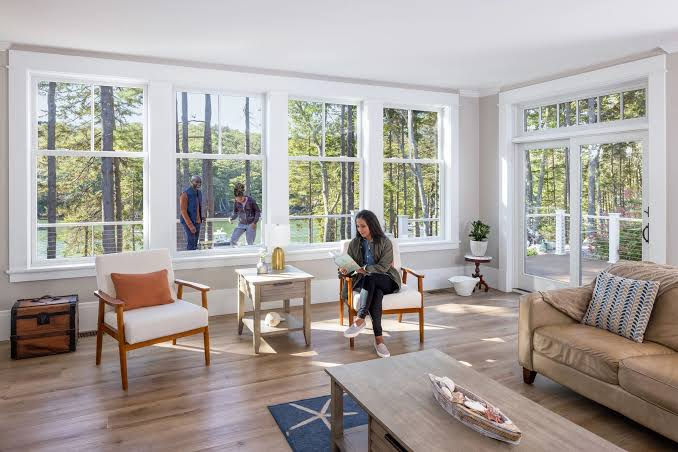
Large glass areas provide attractive views and abundant daylight, but they can also have a substantial effect on a building’s thermal behavior.
A small window with a particular rating may have a relatively modest effect on indoor temperatures. A wall dominated by glass can have a much greater impact, particularly when it receives direct sunlight.
For large modern homes, offices, retail buildings, and other properties with extensive glazing, selecting suitable performance specifications becomes increasingly important.
Good design considers the entire window area rather than focusing on an individual pane in isolation.
Exterior Shading
Window glass is only one part of solar-control strategy. Exterior shading can be extremely effective because it can stop sunlight before it reaches the glass.
Overhangs, balconies, shutters, exterior blinds, and appropriately positioned landscaping can reduce direct solar exposure.
Interior curtains and blinds can also help manage sunlight, although exterior shading generally has an advantage because it prevents some solar energy from reaching the glazing in the first place.
Combining suitable glazing with thoughtful shading can produce better results than relying on either strategy alone.
Energy Efficiency
The correct solar heat gain characteristics can contribute to improved building energy performance. In cooling-dominated buildings, reducing unnecessary solar heat can decrease cooling loads.
In heating-dominated buildings, appropriately managed solar gain may provide useful warmth.
The overall energy impact depends on the complete building envelope, including walls, roof, doors, air leakage, insulation, HVAC equipment, occupancy, climate, and window design.
This is why it is difficult to promise a specific energy saving simply from selecting a particular SHGC value. The rating is an important component of performance, but it is not the entire energy-efficiency equation.
How to Compare Products
When shopping for new windows, consumers should examine the manufacturer’s performance information rather than judging products solely by frame appearance or glass color.
Look for the SHGC and U-factor, and consider visible transmittance when daylight is important. It is also useful to understand whether the published rating applies to the complete window assembly.
Certification and standardized testing can make product comparisons more meaningful. The National Fenestration Rating Council (NFRC) provides standardized ratings for window, door, and skylight products in the United States, giving consumers a common framework for comparing performance.
Local energy codes and regional efficiency programs may also specify minimum or recommended performance levels.
Common Misunderstanding
One common mistake is assuming that the lowest SHGC is always the most energy-efficient choice.
That approach ignores the difference between climates and building designs. A window that is excellent for a hot, cooling-dominated building may not be the ideal choice for a cold climate where passive solar heating is valuable.
Another mistake is considering SHGC without looking at U-factor. Solar control and insulation are separate aspects of window performance.
A better approach is to evaluate the complete window specification and consider how the product fits the building’s location, orientation, shading strategy, and heating and cooling needs.
Choosing the Right Window
Selecting the right glazing starts with understanding the property rather than starting with a particular product.
Consider the local climate, the direction of each window, the amount of glazing, exterior shading, heating and cooling requirements, and the desired amount of daylight.
For a new construction project, architects and energy consultants can model different glazing options and determine how they influence annual energy performance.
For a replacement project, homeowners can compare certified window ratings and discuss appropriate specifications with experienced installers.
The right choice is usually a balanced solution, not simply the product with the lowest or highest rating.
Final Thoughts
SHGC windows are best understood as windows evaluated according to their Solar Heat Gain Coefficient, rather than as a separate window category. The rating provides valuable information about how much solar heat can enter a building through glazing.
Lower values generally reduce solar heat gain, while higher values allow more solar energy to contribute to indoor heat. Neither option is universally better. The ideal selection depends on climate, orientation, shading, building design, window size, insulation, and the property’s heating and cooling requirements.
When comparing modern windows, SHGC should be considered alongside U-factor, visible transmittance, glazing technology, frame construction, and installation quality. Taking this broader approach makes it easier to choose windows that provide comfort, useful daylight, and appropriate thermal performance throughout the year.
Ultimately, understanding solar heat gain gives homeowners and building professionals another practical tool for making smarter window decisions. A well-selected window is not simply attractive—it works as part of the building envelope to help create a more comfortable and efficient indoor environment.
