


Introduction
Shillingford Abbot Devon is a small historic settlement in the countryside south of Exeter, in the Teignbridge area of Devon. Although it is modest in size, the village has a surprisingly deep history, with connections reaching back to the medieval period and references in the Domesday Book of 1086. Its traditional cottages, old farmhouses, surrounding farmland and links with Torre Abbey make it an interesting place for anyone researching Devon’s heritage.
Unlike larger Devon destinations, this is not a location famous for major tourist attractions or a busy town centre. Its appeal is quieter. The area offers a glimpse of traditional rural Devon, where historic buildings, farmland and centuries-old settlement patterns remain part of the landscape.
The settlement is also closely connected with neighbouring Shillingford St George. Together, the two communities form an important part of the local history of this corner of Devon. The local history society continues to research and document that past, helping preserve information about farms, families, buildings and everyday life in the area.
Location
The village lies close to Exeter, making its countryside setting particularly notable. It is situated within the wider Teignbridge district of Devon and forms part of the civil parish of Shillingford St George.
Its location gives residents and visitors access to the peaceful character associated with rural Devon while remaining relatively close to the facilities and transport connections of Exeter. This balance between countryside and city makes the surrounding area attractive to people who prefer a quieter setting without being completely isolated from urban amenities.
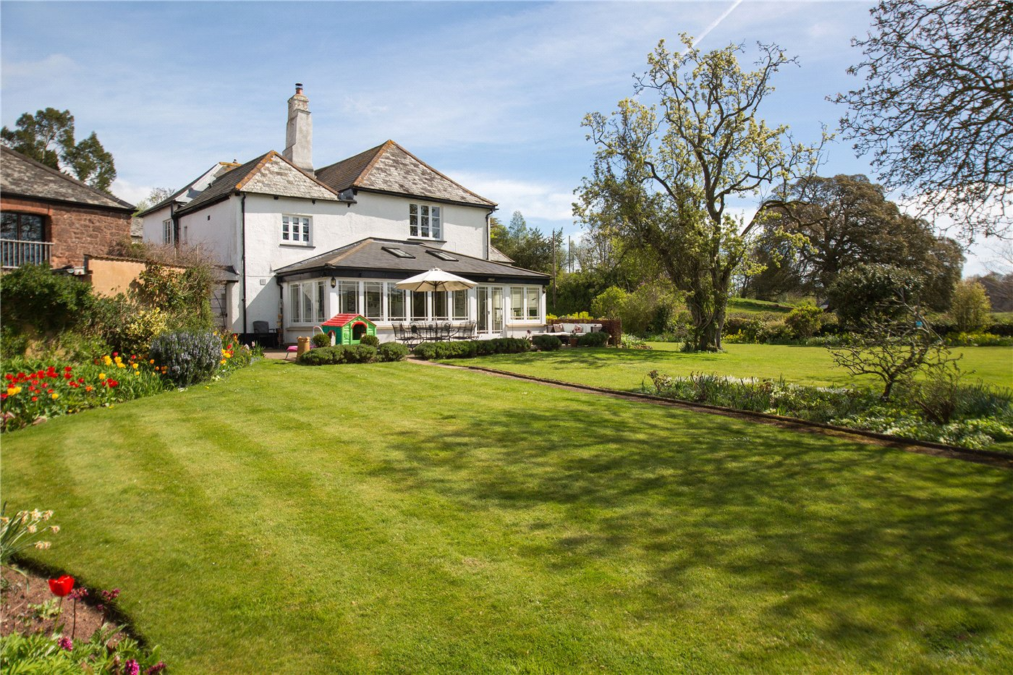
The landscape around the settlement is predominantly rural. Farms, lanes, fields and historic properties help create the traditional appearance associated with many villages in Devon.
Bio Table
| Detail | Information |
|---|---|
| Place | Shillingford Abbot |
| County | Devon, England |
| Country | United Kingdom |
| Type | Historic rural settlement |
| Nearby City | Exeter |
| Historic Association | Torre Abbey |
| Recorded History | Medieval period and earlier |
| Local Parish | Shillingford St George |
| Known For | Rural landscape, historic farms, cottages and heritage |
| Notable Heritage | Village Cross, historic cottages and farmhouses |
| Best For | History, countryside, architecture and local research |
Ancient Roots
The history of the area is considerably older than its present-day appearance might suggest. The settlement was recorded in the Domesday Book, the great survey of England completed in 1086 following the Norman Conquest.
Open Domesday records Shillingford, covering what is now associated with both Shillingford Abbot and Shillingford St George, with 31 households in 1086. The record mentions villagers, smallholders and slaves, together with ploughlands, meadow, woodland, cattle and sheep.
This information provides an important insight into the character of the settlement nearly a thousand years ago. Agriculture was central to local life, and the land was valued for cultivation, grazing and woodland. The recorded resources show that this was not simply an isolated collection of houses but an established rural community with an organised agricultural economy.
The Torre Abbey Connection
One of the most interesting parts of the area’s history is its association with Torre Abbey.
The parish history of St George’s Church explains that the northern part of Shillingford was granted to Torre Abbey during the reign of King John, between 1199 and 1216. This area subsequently became known as Shillingford Abbot.
That religious connection helps explain the unusual name. “Abbot” refers to the settlement’s historical association with the abbey rather than being the name of a modern individual or family.
The connection also demonstrates how medieval religious institutions influenced land ownership and settlement names across Devon. Abbeys were major landowners, and their estates could include farms, villages, woodland and agricultural land.
Traditional Buildings
The architecture is one of the strongest reminders of the area’s rural past. Several historic properties have survived and are officially recognised for their architectural or historic interest.
Among them are Hamlyn Cottages, a group of three cottages listed at Grade II by Historic England. The buildings are thought to date from the 18th century, with whitewashed cob and stone walls and a traditional thatched roof. Historic England notes that the original arrangement may have consisted of small one-cell cottages, illustrating the modest domestic architecture of earlier rural communities.
These cottages are valuable not simply because of their age but because they show how ordinary people once lived. Their construction materials and layout reflect traditional Devon building practices, particularly the use of cob, stone, timber and thatch.
Historic Farmhouses
Agriculture has played a major role in the area’s development, and historic farmhouses provide another important connection with that past.
Pengelly’s Farmhouse, on Barton Lane, is a Grade II listed building. Historic England describes it as a farmhouse that was substantially remodelled during the 19th century from an earlier building, probably dating from the 17th century. Its construction includes whitewashed rendered cob and a slate roof.
The building is especially interesting because its physical form appears to preserve evidence of changes made over different periods. Historic England suggests that parts of the property may originally have had a traditional three-room-and-passage arrangement, while another section may once have been a barn before being converted into accommodation.
This type of building tells a larger story about rural Devon: houses were frequently altered as farming practices, family circumstances and economic conditions changed.
The Village Cross
Another fascinating heritage feature associated with the settlement is the Village Cross at nearby Shillingford St George.
Historic England lists the cross at Grade II. The surviving medieval crosshead and part of the shaft were later re-erected on a newer base. According to the historical description, the cross was brought from a garden in Shillingford Abbot, where it had been associated with the hamlet’s Torre Abbey connection. It was subsequently placed in the churchyard and later re-erected as a war memorial.
The story of the cross demonstrates how historic objects can move between locations while retaining connections with the communities from which they came. It is also a reminder that local heritage is not restricted to large monuments or famous buildings.
Rural Life
For centuries, everyday life here was closely connected with farming. The Domesday record provides evidence of livestock, cultivated land, meadows and woodland, while later historic farmhouses and cottages show how agricultural communities continued to develop.
Research into the area’s farms remains an important part of local history. The Shillingford Local History Society has published The Ancient Farms of Shillingford Saint George and Shillingford Abbot, demonstrating the continuing interest in the area’s agricultural heritage.
This research is valuable because farm names, buildings and fields can preserve information that is not always obvious from modern maps. They can help researchers understand how land was divided, occupied and worked over generations.
A Changing Community
The area has changed considerably over the centuries, even though its rural appearance can make it feel timeless.
Historical material records an earlier name, Lower Shillingford, for the settlement. Research published through the Friends of Devon Archives describes how Sir Robert Palk of Haldon House acquired properties in the wider parish and farms and cottages in what was then called Lower Shillingford. In 1806, his son Sir Lawrence Palk offered leases on several groups of smallholdings, cottages, gardens and orchards.
Such records provide a glimpse into property ownership and rural housing arrangements in the early nineteenth century. They also show that the settlement contained multiple cottages and smallholdings rather than consisting solely of large country houses or farms.
Local Community
Although the settlement is small, its history continues to be actively studied. The Shillingford Local History Society was formed in 1998 and held its inaugural meeting in February 1999. The society focuses on the history of Shillingford St George and its neighbouring settlement, while also producing research publications and organising talks.
This kind of community-led historical research is particularly valuable for small villages. National records can provide dates and official descriptions, but local societies often preserve memories, photographs, stories and details about individual buildings that might otherwise disappear.
Why Visit?
People looking for major attractions may not consider this one of Devon’s headline destinations. Its appeal is different.
The attraction lies in the peaceful countryside, historic architecture and sense of continuity. Visitors interested in local history can appreciate the surviving cottages, farmhouses and heritage features, while those who enjoy rural landscapes may simply value the quieter atmosphere.
Its closeness to Exeter also makes the wider area useful as part of a trip exploring the countryside surrounding the city. Rather than expecting a conventional tourist centre, visitors are better served by approaching it as a small historic community whose character comes from its landscape and buildings.
What Makes It Special?
What makes Shillingford Abbot Devon distinctive is the combination of several historical layers in one small rural area.
There is the medieval connection with Torre Abbey, the Domesday reference from 1086, the agricultural traditions represented by historic farms, and the surviving eighteenth- and nineteenth-century buildings. Each period has left something behind.
The Grade II listed cottages and farmhouse provide tangible examples of historic Devon construction, while the Village Cross demonstrates how medieval material heritage has been preserved and reused. Together, these features make the area much more historically interesting than its small size might initially suggest.
Age, People and Modern Identity
Because this is a village rather than a person, details such as age, height, physical appearance, family members or personal net worth do not apply. There is no individual celebrity or public figure called Shillingford Abbot whose biography can accurately be presented in those terms.
Instead, the meaningful “age” of the settlement is its historical depth. Its documented presence reaches back at least to the Domesday survey of 1086, giving the wider Shillingford settlement a recorded history of more than nine centuries.
Likewise, social-media profiles should not be confused with the identity of the place. Information about the community is more reliably found through local organisations, parish resources, historical societies and official heritage records.
Final Thoughts
Shillingford Abbot Devon is a good example of how a small English settlement can contain a remarkable amount of history. Its connection with Torre Abbey explains an important part of its name, while the Domesday Book provides evidence of an established agricultural community more than 900 years ago.
The surviving historic buildings add another layer to the story. Hamlyn Cottages preserve the character of eighteenth-century rural housing, while Pengelly’s Farmhouse reflects the evolution of an older agricultural property. The medieval cross, now preserved at Shillingford St George, provides another tangible link with the past.
For anyone interested in Devon’s villages, genealogy, architecture, rural history or traditional countryside, this small settlement deserves attention. It may not have the scale of Exeter or the tourist profile of Devon’s best-known coastal towns, but its history is deeply rooted in the landscape. That quiet combination of medieval records, farming traditions, historic buildings and community research is what gives the place its enduring character.
FAQs
Q: Where is Shillingford Abbot?
A: It is a historic rural settlement in Devon, close to Exeter and associated with Shillingford St George.
Q: Why is it called Shillingford Abbot?
A: The name reflects its historical connection with Torre Abbey and its medieval landholding interests.
Q: How old is Shillingford Abbot?
A: The wider Shillingford settlement has medieval documentary evidence, with its history reaching back at least to the Domesday period.
Q: What historic features are nearby?
A: Notable features include historic cottages, farmhouses and the medieval Village Cross. Historic England records the cross as Grade II listed.
Q: What is Torre Abbey’s connection to the area?
A: Torre Abbey was founded in 1196 and became an important medieval religious landowner in the region, helping shape the area’s history and identity.
